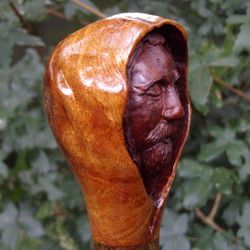
How to make a good walking stick? How do you make a walking stick? A good walking stick starts with a good piece of woo of course. What is the strongest wood for a walking stick? The size, shape, sturdiness, and.
Whittle off the bark. Making your own walking or hiking stick can be a fun and rewarding experience. You can control the process, choose the decorative touches, and take pride in crafting this useful tool from start to finish.
The first step is to select a branch or limb that will eventually provide the look you want. A walking stick should be about inches (cm) thick at the top and only slightly smaller at the bottom. Shave and Trim the Stick Carefully. Maples and most hardwoods make decent walking sticks too, but heavier than poplar. Stay away from pine or spruce because of the sticky sap.
If you enjoyed this video please leave a. In this step you will learn about bark. In the first and second picture the bark is cut in. Let it dry for a few days, and dress it up with some leather. Boom — you’ll have invested less than $into making something you can sell for around $40! That’s how you make money hand carving walking sticks at home.
As Seen On TV - Fast, Free Shipping - Finally, A Cane That Really Works. Remove twigs with a pocketknife and strip the bark if you want. Round off sharp points or level knobs with a plane or.
Decoratethe stick with carvings, wood burnings,. How To Make a Walking Stick Find a stick that fits comfortably in your hand. Most people are fine with a stick that is about 1¼ inches across.
Always look for the perfect stick. Cut the fallen sapling into a length slightly longer than the length of the walking stick you desire. Your height and body size. Find and save ideas about walking sticks on Pinterest. Adjust the Table Saw guide to 1. Mark the wood from.

Step 2: Cutting the Wood. The Best Woods for a Boat Seat. However, most common types of oak and hickory will also make strong walking sticks. Birch, ironwoo black cherry, ash and maple are also very stiff, strong woods.
Head to the nearest forest and search the ground for long branches that have broken off. This is the fun part! You can also saw off one of the small limbs of a tree, but keep in mind that it will have to dry for quite a long time. Search your property or nearby woodlands for your stick. Growing the Perfect Stick.
Plant an oak sapling. The younger the sapling, the more intricate your twists will be. You can use dea dry woo but it’s hard to. Creating the Walking.
They use chestnut, silver birch, oak and hazel. Basic cane construction: Canes can be made just as art or for use. If as art, the strength is not very important. The cane shaft: Canes come in all manner of design and construction.
See more ideas about Walking sticks , Handmade walking sticks , Hiking sticks. When you make your own walking sticks , you must choose between using dry wood or green wood. Using green wood often in stronger, more customizable finished products, but the wood must dry. It should have a circumference a bit bigger than the handle of a baseball bat.
Use a utility knife to remove all the bark from the branch. Let the branch dry in a warm, dry place for three or four weeks. Similarly, they make excellent, if heavy, walking sticks.

Maple is not only a strong woo it is abrasion resistant, so it will last for many miles on the trail. Many male species will work, although ashleaf and silver maples have somewhat weaker wood than red or sugar maples. Rerrick Stick Making Supplies pride themselves in dealing with only the best.


No comments:
Post a Comment
Note: only a member of this blog may post a comment.