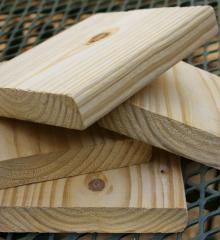
In order to last for decades after they are sunk into the groun wood utility poles need preservatives that fend off termites, fungi, and the elements. Not many chemicals are up to the challenge. About half the wood poles in the US are treated with pentachlorophenol, known as “ penta” in the trade. It can be biodegraded by some bacteria, including Sphingobium chlorophenolicum.

It was primarily used as a wood preservative. Pentachlorophenol (PCP) is an organochlorine compound used as a pesticide and a disinfectant. Wood preservative products are those that claim to control wood degradation problems due to fungal rot or decay, sapstain, molds, or wood -destroying insects. Both the treatment process and the use of treated-products can result in exposure to pesticides for both people and the environment. Inorganic boron is listed as a wood preservative in the AWPA standards, which include formulations prepared from sodium octaborate, sodium tetraborate, sodium pentaborate , and boric acid.
While a homemade borate and propylene glycol solution is often mentioned as a wood preservative , the instructions call for boiling the mixture until it reaches 2degrees Fahrenheit. While borax and boric acid are not flammable, the flash point of propylene glycol is 224. Wood Preservative shields wooden surfaces from the elements and wood-eating insects.